

Broad reasoning is no longer the missing ingredient.
The best systems already reason across an enormous universe of subjects, jurisdictions, authorities, documents, and tasks.

Purpose-built for New York Labor Law §§ 240(1) & 241(6)
Every Scaffold Law file begins as scattered paper, email, and institutional knowledge. Rayne turns that material into one defense record built for trial.
Limited founding rollout Invite only New York
A law written for another century. A defense still managed in inboxes and spreadsheets.
New York’s first Scaffold Law was enacted in 1885. Today, Labor Law § 240(1) places extraordinary exposure on owners and contractors in elevation-related injury cases. Yet the defense record still lives across email, spreadsheets, claim files, law-firm systems, medical records, and dockets.
Identity, employment, treatment, prior claims, contracts, safety devices, instructions, and control can all be difficult to verify. Most matters settle. Too few are organized from the beginning as though they will be tried.
Rayne was built by a 20-year Scaffold Law defense veteran who watched that fragmentation compound case after case.
I’m sure you’ve tried it. After thousands of hours working with and building AI, we’ve learned that today’s constraints are not analysis or intelligence. Both are already extraordinary out of the box. Rayne tackles the context and memory problem—the usefulness and usability of that intelligence.
The best systems already reason across an enormous universe of subjects, jurisdictions, authorities, documents, and tasks.
What a model can reason over is still bounded by what remains present. A session is not durable case memory, and a prompt is not an institutional record.
The ontology decides what belongs, how it relates, what persists across the matter, and where every consequential fact came from.
AI supplies the reasoning. Rayne supplies the context, memory, and structure.
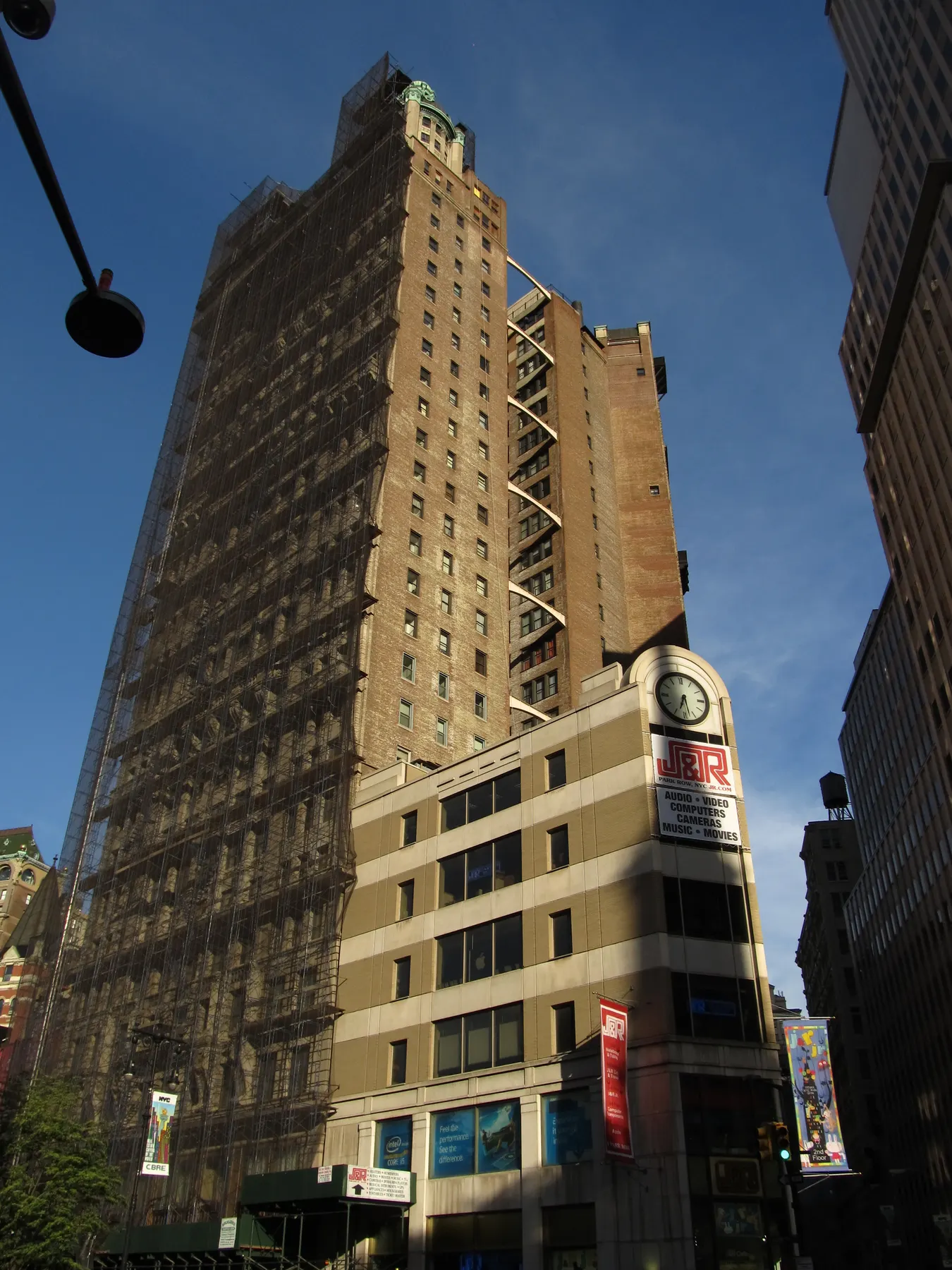
§ 240.
All contractors and owners and their agents…shall furnish or erect, or cause to be furnished or erected…scaffolding, hoists, stays, ladders, slings, hangers, blocks, pulleys, braces, irons, ropes, and other devices which shall be so constructed, placed and operated as to give proper protection to a person so employed.
Read the official text at the New York State Senate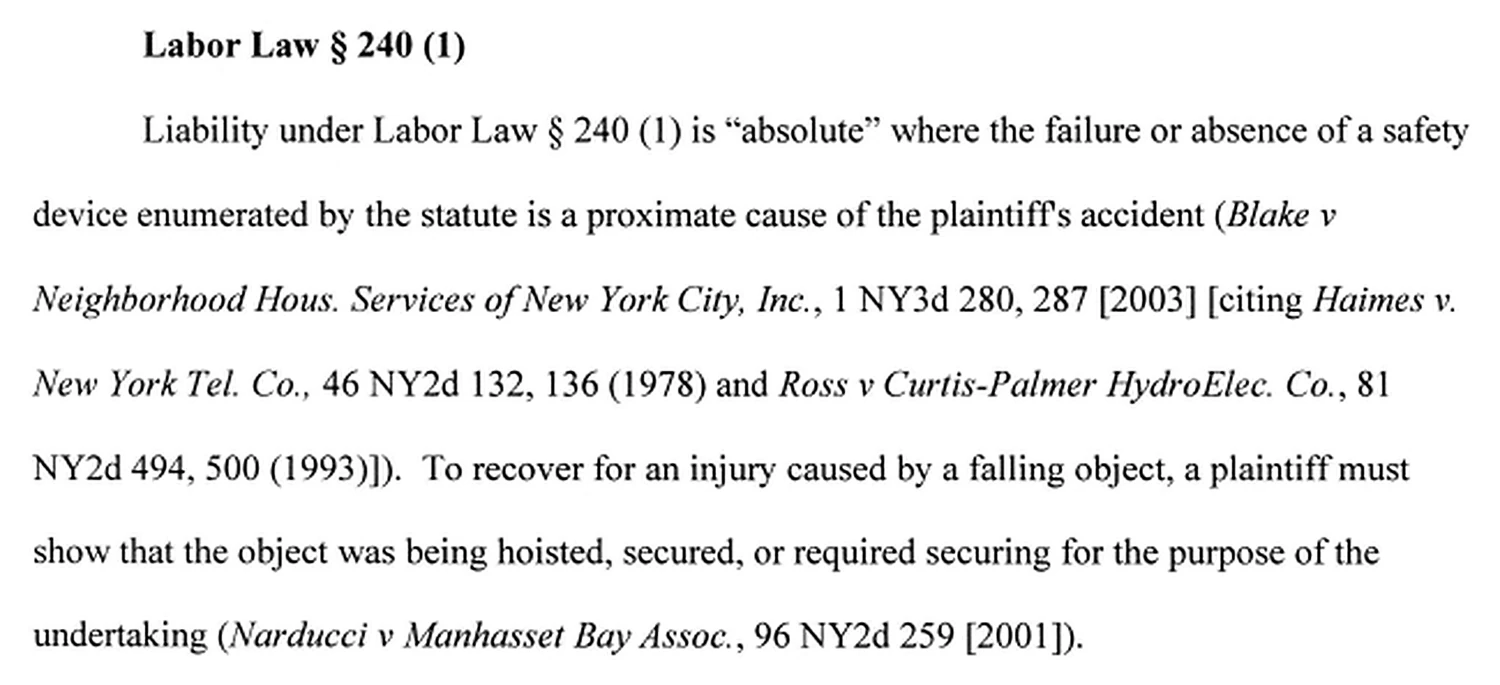
Rayne classifies the record, maps what matters, and carries the source into the analysis. The matter, evidence, law, coverage, and defense work live in one operating record.
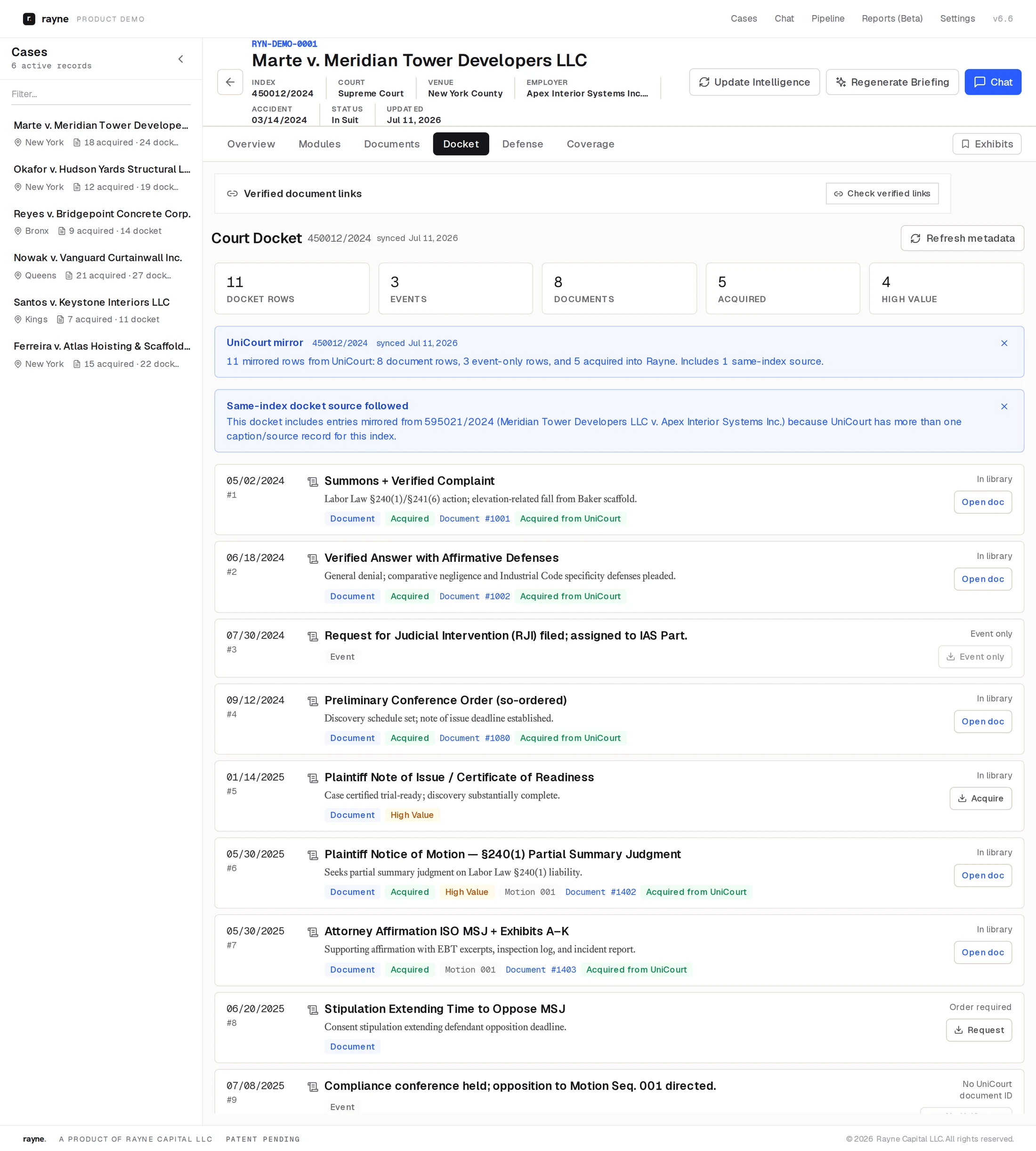
Case posture at a glance: metadata, freshness, and intake in one structured header.
The Scaffold Law ontology sorts every filing into investigation, discovery, motion practice, and work product.
Every document carries its source, extraction method, and confidence. Provenance travels with the answer.
Posture, liability, strategy, and dated action items: the defense workflow, not a chat transcript.
Additional-insured, indemnity, and primary limits with tender status: exposure read before it moves.
Verified docket mirrored from the court record: events, filings, and acquisitions tied to their source.
Rayne workspace structure. Synthetic demonstration matter. The live V8.9.8 interface continues to evolve.
Not a legal copilot bolted onto a chat box. Rayne is the place where the record, its provenance, the law, and the defense position remain queryable together.
Numbers with their scope attached. Each figure names the test that produced it, so nothing reads as blanket platform accuracy.
Each client decides which model account touches its work and which data policy governs it.
A Rayne-controlled model trained on the Scaffold Law ontology and real judicial decisions.
A second Rayne-controlled model built for the same specialized defense record.
For Lex and Nemo, client matter data is not used for model training and is not retained for secondary use.
Optional frontier processing uses the client's selected enterprise account, credentials, and provider data terms.
Frontier usage is client-selected and client-borne. Provider privacy, training, and retention terms follow the client's enterprise agreement.
Rayne gives the model durable, governed context: the knowledge of this matter, the controlling body of law, and the network surrounding Scaffold Law.
The ontology tells the system what each document is, what on it matters, why it matters, what it touches, and what remains missing. More than 20 years of defense experience shaped that structure.
A complete record. A connected defense.
Documents, testimony, chronology, parties, injuries, contracts, coverage, and every source in this file.
Statutory elements, Industrial Code provisions, defenses, burdens, and the decisions that carry the law in practice.
Courts, carriers, firms, employers, providers, experts, sites, trades, and relationships that recur across matters.
Persistent across the life of the matter.
Statutory elements, Industrial Code provisions, dispositive defenses, burdens, and controlling authority.
Claimants, employers, owners, contractors, counsel, witnesses, experts, providers, and their relationships.
Work activity, elevation risk, devices, supervision, control, instructions, safety practice, and chronology.
Injuries, treatment, referrals, facilities, prior history, disability claims, billing patterns, and claimed loss.
Trade contracts, indemnity, insurance provisions, additional-insured status, tenders, limits, and allocation.
Motions, deadlines, decisions, assigned court, appellate treatment, and case posture.
Every governed fact retains its source and history. The system can reason across the matter without pretending that a temporary prompt is durable memory or severing an answer from the evidence.
General legal AI must range across an immense and changing universe. Rayne starts narrower: the decisions that actually carry Scaffold Law citations, then brings that corpus into the governed record of this matter.
The steepest part of the curve: a focused core carries 50% of citation instances.
Including 90 Court of Appeals and 349 Appellate Division decisions.
Including 152 Court of Appeals and 628 Appellate Division decisions.
The complete Court of Appeals corpus touching §§ 240(1), 241(6), or 200.
Research basis. Rayne census of 1,688 live Kings County Scaffold Law dockets and 11,992 citation instances. Citation coverage describes this observed docket population; it is not a claim that other decisions are irrelevant.
The same courts, carriers, firms, employers, providers, experts, and trades recur across Scaffold Law matters. A system built only for this field can preserve those relationships without confusing a connection for a conclusion.
Actor counts are current Rayne research estimates for the New York City market and will be published with a fuller methodology. Network signals remain source-linked investigative context subject to professional review.
The interface can change without dividing the record. The same governed matter remains available through the browser, the Rayne desktop client, and scoped agent access approved by the client.
Work with local documents and watched folders while keeping the matter connected to the same source-linked case brain.
Scoped access lets approved agents work against Rayne’s matter structure without turning a model session into the system of record.
matter context / citations / scoped tools
client approved
Move from a document room to a defensible position. See the contradictions, the available defenses, and the deadlines with each one anchored to the record — so preparation time goes to argument, not to reconstruction.
Read a single matter and a book of matters through the same verified lens. Understand coverage, indemnity, judicial posture, recurring participants, and fraud indicators early enough for the reserve, SIU response, and defense strategy to be right.
Give owners, contractors, and their in-house legal teams one view of how trade contracts, indemnity, and additional-insured status allocate liability across the project — with the contract language itself one click away.
Every assertion Rayne makes opens to the document, page, and line it came from. Analysis is a path back to the record, not a substitute for it.
What Rayne surfaces can be reviewed, checked, and defended. The provenance of a conclusion is part of the conclusion.
Rayne organizes and surfaces. Legal judgment — what to argue, what to concede, what to file — stays with counsel.
Access is scoped to the matter and the engagement. Client material is used to serve the matter it belongs to — not to train shared systems.
Fraud indicators are investigative leads tied to evidence. A score or network connection does not become a conclusion without professional review.
Judicial and cross-claim intelligence retains its source, date, scope, and confidence so that the underlying record can be checked.
New York Labor Law §§ 240(1) and 241(6) place near-absolute pressure on owners, contractors, and insurers. Every claim compounds into a larger liability system — and the defense meets it one file at a time.
After more than two decades defending these cases, the same failure kept returning: no one could continuously read every decision, connect every participant, and carry what the defense learned into the next file.
Project 240 traces how the statute was judicially transformed — the legal and economic record that makes the case for a smarter defense.
Rayne is not a general legal copilot. It is the queryable, cited intelligence system for defending §§ 240(1) and 241(6) matters — organized so the defense can finally carry its knowledge forward.
A founder’s walkthrough is on the way
A recorded presentation on why Rayne was built — and how it works — will be published here.
Defense attorney · 20+ years · New York Labor Law
Two decades defending Scaffold Law claims, now building the intelligence system the defense never had.
To be announced
Founding roles across law, data science, and engineering are being filled as the platform expands.
To be announced
We are assembling a team that pairs deep defense experience with modern AI and data engineering.
Most legal AI tries to understand law in general. Rayne was built to know New York Scaffold Law in depth: §§ 240(1) and 241(6), the five-borough bench, the recurring defense network, and a decision record no single lawyer could continuously read. Every answer still opens to its source.
Rayne began with a phone call. A good company reached out, and its counsel — Rayne's founder — needed to get current on more than a hundred cases at once. The files arrived the way they always do: in fragments, from every direction, never the whole picture. Getting a reliable view of the entire caseload felt impossible.
So the founder started building one — a way to assemble the scattered record into something whole, and to actually understand it.
As the work continued, everyone the problem touches kept surfacing: construction companies; in-house legal departments; insurance companies and their many distinct functions — claims leadership, adjusters, and underwriters; defense counsel; and the defense counsel who report to their carriers. Each perspective worked its way into how the platform was designed.
In the end, Rayne is for anyone who has faced the same thing: a case file handed over in pieces, when what they needed was the whole record in one place — and the ability to ask it anything.
The commitment funds the build-out of Rayne’s defense intelligence platform for New York Labor Law §§ 240 and 241(6).
Read announcement ForthcomingFurther announcements will be posted here as they are released.
Limited founding rollout Invite only New York


Rayne is a public argument about how New York defends these cases. Critics and supporters will both have a place to be heard.
Comments will be published with attribution after moderation.